
New Growth in 2026: The Resilience & Revitalization of the Innis Community Gardens
For the past three springs, the northwest corner of St. George Street and Sussex Avenue has come to life through the Innis Community Gardens. Located just below Innis College, this vibrant space features a variety of vegetables, herbs, and flowers, grown by and for the Innis community all summer long. Despite many trials and tribulations – from construction work blocking off available space to the ravenous nibbling of produce by squirrels – the Gardens have persisted since their 2023 founding and now find themselves freshly poised for the growing season.
This springtime brings with it an even more significant flourishing than usual for the initiative, as Innis is entering a new era through both the Renewal & Expansion project’s much-anticipated completion and a greater College-wide commitment to sustainability. In this exciting moment, the Innis Community Gardens represents a flagship initiative which welcomes the participation of students, staff, and faculty alike as we prepare for spring planting, now just around the corner!
With the new rise of sustainability at Innis, the Gardens are now coming to represent more than just a space for the College’s green thumbs to congregate. In October of 2025, the Innis College Council (ICC) unveiled a new five-year strategic plan for the College going forward. This landmark moment in Innis’ 62-year history included all-new strategic priorities in sustainability across three primary areas, these being: Physical Infrastructure & Greenscape, Food & Hospitality, and Teaching & Learning.
Since then, a new sustainability portfolio has been developing under the joint work of Innis staff and students, particularly through the efforts of the Innis Sustainability Advocates (ISA) volunteer group. Many student-driven projects and initiatives are being actively created in areas like green roofing, waste diversion, food security, and ecological wellness, with more on the way. This exciting shift to sustainability at Innis creates new opportunities for operational, infrastructural, and educational changes in all areas of the College.
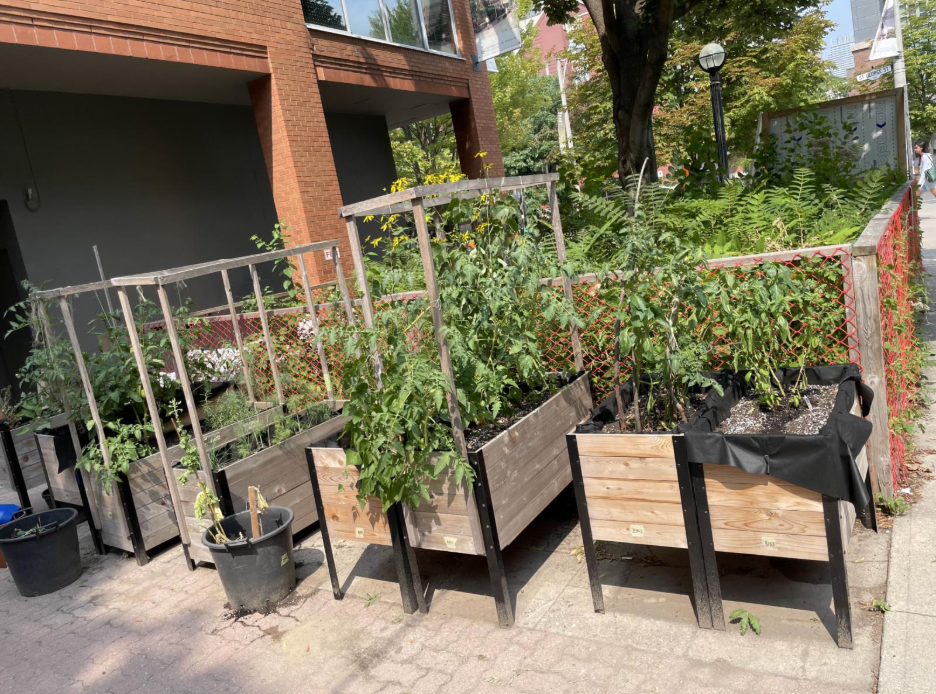
Planter boxes sitting outside the fenced-in garden area.
However, no existing initiative maps onto the College’s strategic priorities quite so well as the Innis Community Garden. In working the soil and seeding new life for the growing season, the Gardens create a new greenscape on the College grounds. The use of native plants like asters and goldenrod in these transformations attracts pollinator species to the area, increasing ecological health and providing a point of safe harbour for members of the urban ecosystem. Through the growth of local and nutritious produce, made available to community members at zero cost, the Gardens affect positive change for food access on St. George campus.
With the holding of regular events and gardening activity sessions, alongside the creation of teaching materials for distribution, the Gardens create an effective space for experiential sustainability education and ecological interaction in the heart of the city. Aligned with the upcoming completion of the College’s Renewal & Expansion project – a large-scale infrastructure addition aimed at creating more space and resources for Innisians – the Community Gardens will soon provide a sustainability-centric and aesthetically pleasing entryway to all who call Innis home.
As springtime prompts us to look to the warm weather and growing season ahead, it also creates the space for much-needed reflection. For the Innis Gardens, the path to this point hasn’t always been smooth.
The initiative has gone through many iterations and changes since its inception. It first began as a transformation of a small, grassy patch beneath a Norway Maple tree on the south side of the primary College building. A joint effort of student groups and supporting staff built planter boxes, poured soil, and sowed the seeds of a brand-new urban agriculture project. Management of the nascent garden was taken over by the Innis Garden Club, a collection of students invested in fostering sustainability and food justice at Innis.
But challenges lie ahead for the young initiative. The reconstruction of the college building at 2 Sussex crowded out the available growing space, and fences were constructed by the municipality to protect the Norway Maple at the garden’s center from any potential damage. In addition, local critters took the opportunity to snack on the veggies grown in the limited space, resulting in lower yields at year’s end for distribution to the campus community.
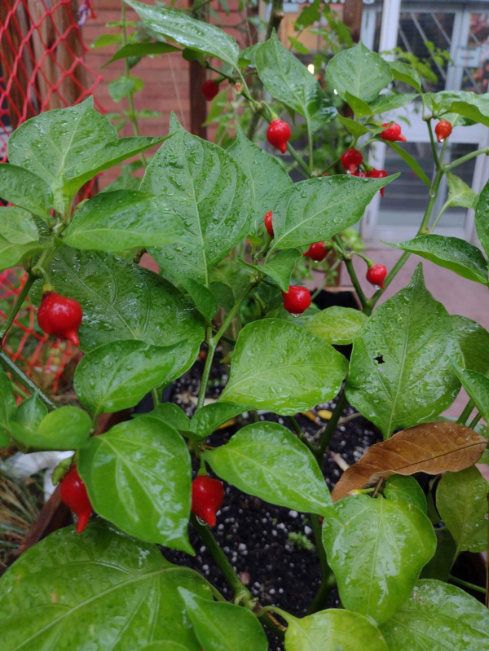
Miniature biquinho peppers growing in a garden box
Amid such turbulence, however, the Gardens have adapted admirably. With the primary garden space fenced off for construction, the interior area has been seeded with predominantly non-food-producing pollinator plants, which require less tending while still providing ecosystem services.
Raised garden boxes have been set up outside the fences, expanding the growing area across the concrete walkways on the street corner. In these boxes, strategic companion planting combinations of mutually beneficial veggies, herbs, and flowering plants have been seeded to get the most out of smaller soil space.
Additionally, eco-friendly innovations for produce protection were implemented to ward off squirrels, including an accessible water bucket to redirect squirrels (who often bite produce because they are thirsty), and the sprinkling of cayenne pepper over freshly sown seeds. Through these methods, the Gardens have managed to maintain summer operations and a season’s-end yield in spite of the challenges faced.
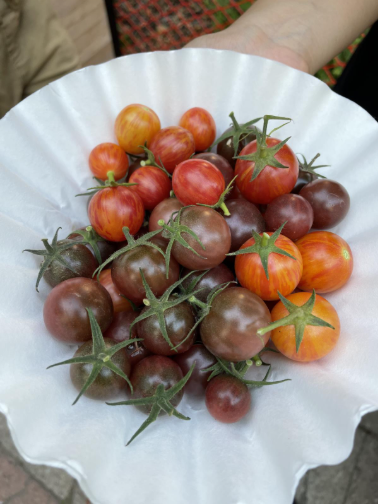
A harvested bunch of cherry tomatoes
Spring 2026 brings with it the newest iteration of the Gardens, and the most major adaptations yet. With the impending end of construction, we are eagerly anticipating the renewal of volunteer access to the fenced-off garden space for the first time in nearly three years.
Such access gives us the chance to not only run operations and planting in the raised planter boxes, but the interior grounds as well. New planters and hanging boxes are also on order, further increasing the grow-space for Gardens programming.
Additionally, to ensure a greater range of consistent community and staff advising, the Innis Garden Club’s governance has been reconfigured, with the Gardens now being managed directly by the garden volunteers and ISA student group, and supported by the Innis College Student Society (ICSS) Sustainability Directors and the Innis College Sustainability Steward. With all-new governance, infrastructure, space access, and student/staff support, the Innis Community Gardens are freshly revitalized and meeting the moment for sustainability at our college.
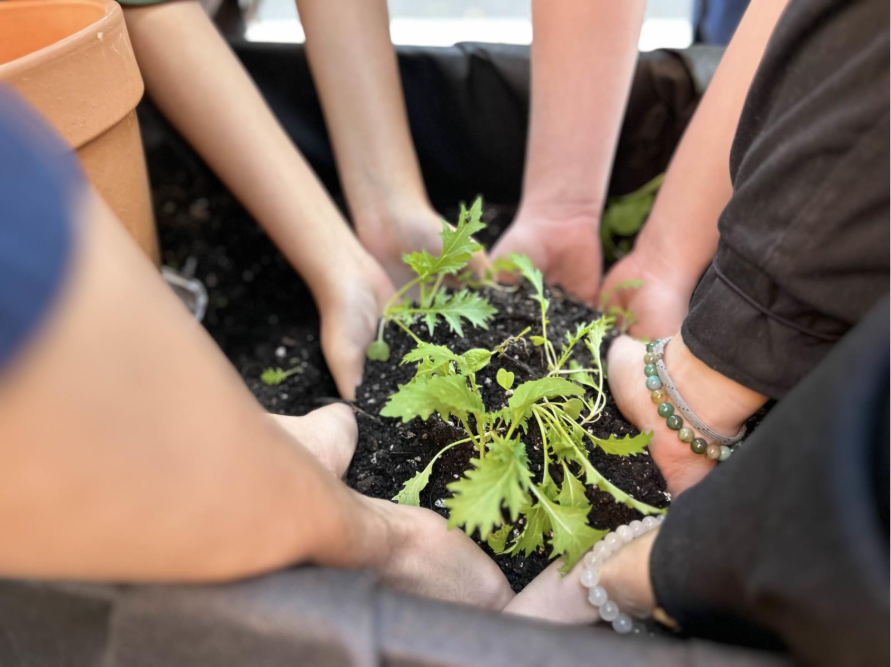
Student volunteers transplanting a crop of arugula
So come out to the garden this spring! Whether you are most interested in food growing, flowers, sustainability, or just finding community, the Gardens welcome you. We are open to all Innis and U of T community members, from students to staff to faculty.
The initiative will be operating all year round, with seed starting and planting events right around the corner in April. You can come check out the space anytime, and drop in on any of our activities. However, if you’d like to be on the mailing list or get CCR accreditation for your participation, be sure to sign up as a garden volunteer.
And if you’d like to learn about and support Innis Sustainability, including not just the Gardens but so much more, consider joining the ISA team! Just visit folio.utoronto.ca and look up Innis Community Gardens or Innis Sustainability Advocates to get involved, or follow along on Instagram (@inniscommunitygardens) to learn about updates. Feel free to reach out to sustainability.innis@utoronto.ca with any questions about sustainability and gardening at Innis College.
To all the Innis community, we hope to see you at the Gardens this year, and celebrate together the wonder of a new spring season!