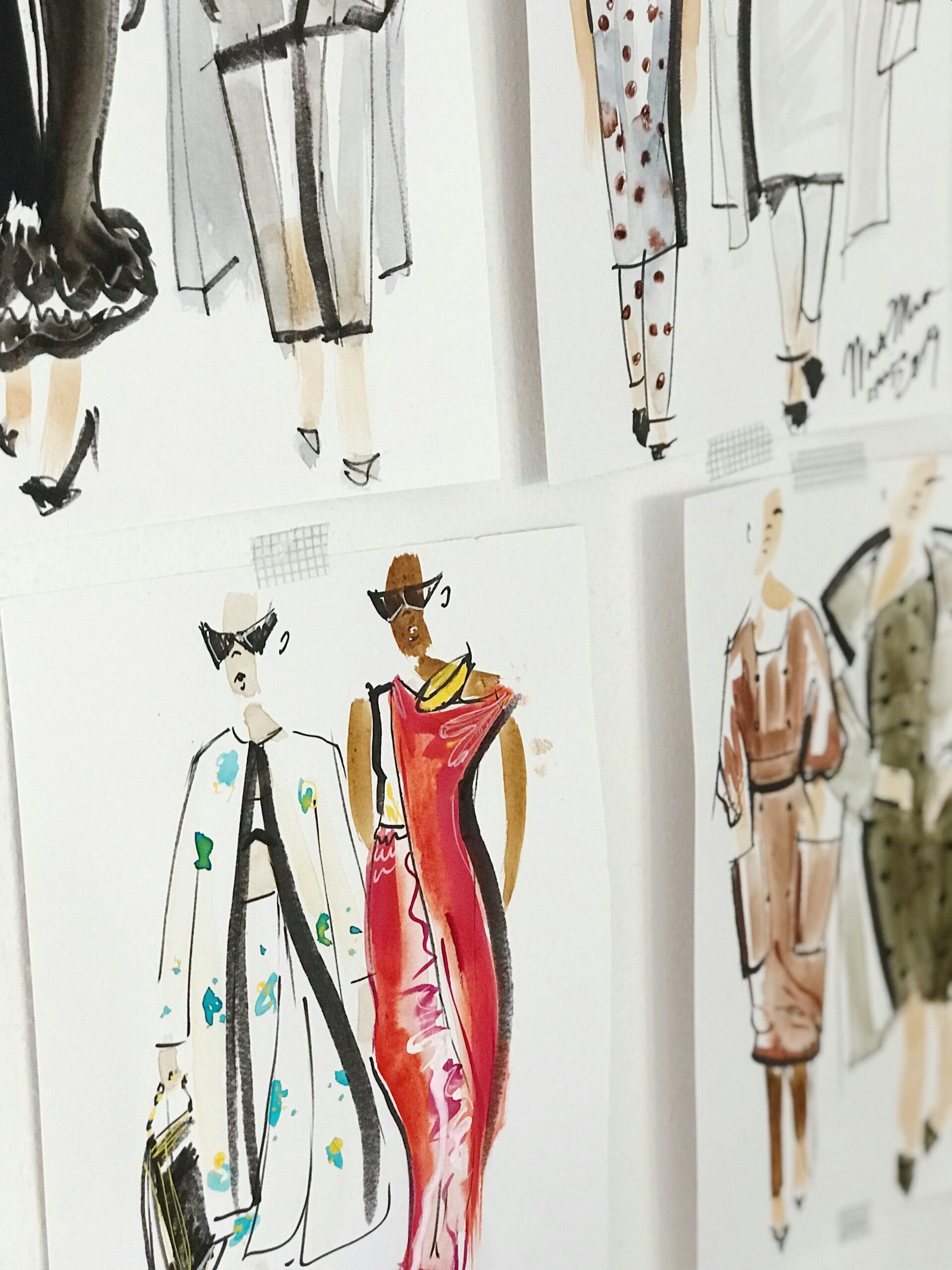
Fashion: Whose Vision Is It Anyway?
“This isn’t my Balenciaga, where’s Demna?” someone commented on the livestream as the lights went down on the first Balenciaga Collection by Pierpaolo Piccioli.
But two comments down, another viewer was practically buzzing. “Finally. A return to Cristóbal’s discipline – clean lines, real structure. Balenciaga is back.”
The applause that followed was neither hesitant nor unanimous; a fractured chorus mirroring the split opinion across social media. Within minutes, competing claims flooded the feeds – some mourning the absence of Demna’s subversive dystopian humor, others praising a so-called “restoration” of the house’s couture roots. The comments weren’t merely about taste: they pointed to a deeper uncertainty running through fashion right now: when a new creative director takes the helm, whose vision are we actually seeing – the brand’s, or the designer’s?
This question has become especially urgent in today’s era of musical-chairs leadership. Appointing a creative director is no longer simply handing someone the keys to a legacy; it’s a high-stakes corporate gamble, a decision that must promise continuity and deliver reinvention. Increasingly, audiences seem unsure which side of that equation they’re supposed to cheer for.
The Weight of a Name – and the Shadow of Another
Recent reshufflings have made this tension more visible than ever. When Jonathan Anderson was rumored to be in conversations with Dior, commentary split before anything was confirmed. Anderson has become one of the most influential designers of his generation, sculpting a hyper-craft, intellectually playful identity at Loewe and elevating it into cultural obsession. Dior, meanwhile, carries one of the most codified archives in fashion – the “New Look,” immaculate tailoring, floral silhouettes, and a carefully curated femininity.
What happens when a designer known for sculptural knits and leather origami is asked to interpret a legacy rooted so firmly in 1950s silhouette logic?
The speculation wasn’t just about aesthetics. It was about control. Would Dior demand that Anderson bend towards house codes, or would his arrival act as a reset, letting his sensibility dominate the brand? In fashion today, either outcome is possible – and both are politically charged.
Similar questions greeted Matthieu Blazy as he stepped into Chanel, a role that carries expectations bordering on myth. Karl Lagerfeld’s decades-long authorship made him almost inseparable from the double-C monogram. Now, with consumers hungry for novelty, the house must walk a tightrope: how much of Chanel must remain Coco, how much Karl, and how much space is left for someone new to leave a mark?
Big Names vs Big Houses
Part of the tension stems from how designers ascend today. Many newly appointed directors build their reputations not through slow, methodical authorship but through standout flashes – viral pieces, cult handbags, or breakout capsules at smaller labels. The industry now rewards immediacy: the bag that jumps to waitlist status, the show that dominates social media within hours. Designers are expected to be personal brands before they become stewards of house brands.
This has created a strange inversion. Where houses once absorbed designers into their identity – think Nicolas Ghesquière adapting his futurism to Balenciaga’s architectural vocabulary – today, designers arrive with highly recognizable signatures. When they take over a major house, the question becomes whether they are shaping the brand or simply parachuting their own aesthetic into a preexisting shell.
Critics have been quick to pounce when it feels like the latter. Some argue that new directors appear to be “finding themselves” more than finding the brand they’re hired to interpret. A first or second collection often resembles their previous work: similar silhouettes, similar palettes, a vibe unmistakably “them.” Thrilling to some; disorienting to others who feel the brand’s DNA slipping.
Heritage as Anchor – or Burden
Fashion houses love to invoke “heritage,” but heritage can be both an anchor and a trap. It provides a narrative to draw from – iconic silhouettes, signature spirit – but also locks expectations firmly in place. When audiences say, “This isn’t my Balenciaga,” they’re often defending a relationship with a brand that shaped their self-expression. Loyalty to a house is emotional, not rational.
Yet heritage can also fossilize a brand, trapping it in perpetual reenactment. A house too beholden to its archive risks predictability and irrelevance. The challenge for any new director is to strike a balance between tribute and disruption – to make something that feels both true to the past and undeniable new.
Some succeed by treating heritage as material to remix. Others tear it down, betting on shock as innovation. Both approaches have their believers and their critics.
A First Season Is Not a Verdict
Historically, the first show was not destiny. Phoebe Philo’s early Celine collections hinted at her eventual revolution but didn’t define it outright. Hedi Slimane’s controversial debut at Celine eventually grew into a commercial powerhouse. Even Demna – now synonymous with Balenciaga’s entire cultural moment – began with a quieter collection that only later evolved into the force we recognize.
But today, debuts are treated like referendums: instant reactions, instant verdicts. The audience wants immediate proof that the designers “gets” the brand – or condemnation if they don’t.
Yet creative vision takes time. A brand is a living organism, not a fixed image. Judging a new director solely by their first steps is like reviewing a novel after the first chapter.
Whose Vision Wins?
So whose vision is it, anyway? The house’s? The designer’s? The investors’? The consumers screaming in the comments?
The answer – productively, frustratingly – remains undecided.
What is clear is that the balance is shifting. Big-name designers carry unprecedented personal influence, while heritage houses cling tightly to continuity. The tension between these forces doesn’t weaken fashion; it animates it. It keeps the industry moving, arguing, evolving.
And that first post-Demna Balenciaga show? Only time will tell whether Piccioli’s collection makes a rupture, a restoration, or the start of something neither side fully anticipates. Fashion rarely reveals its future immediately.
Visions take seasons – sometimes years – to become legible.
From now, the question remains open. And perhaps that uncertainty is exactly what keeps fashion, in all its volatile brilliance, alive.