You Can’t FOMO Me Into Having Fun (and Other Cynical Observations About Summer)
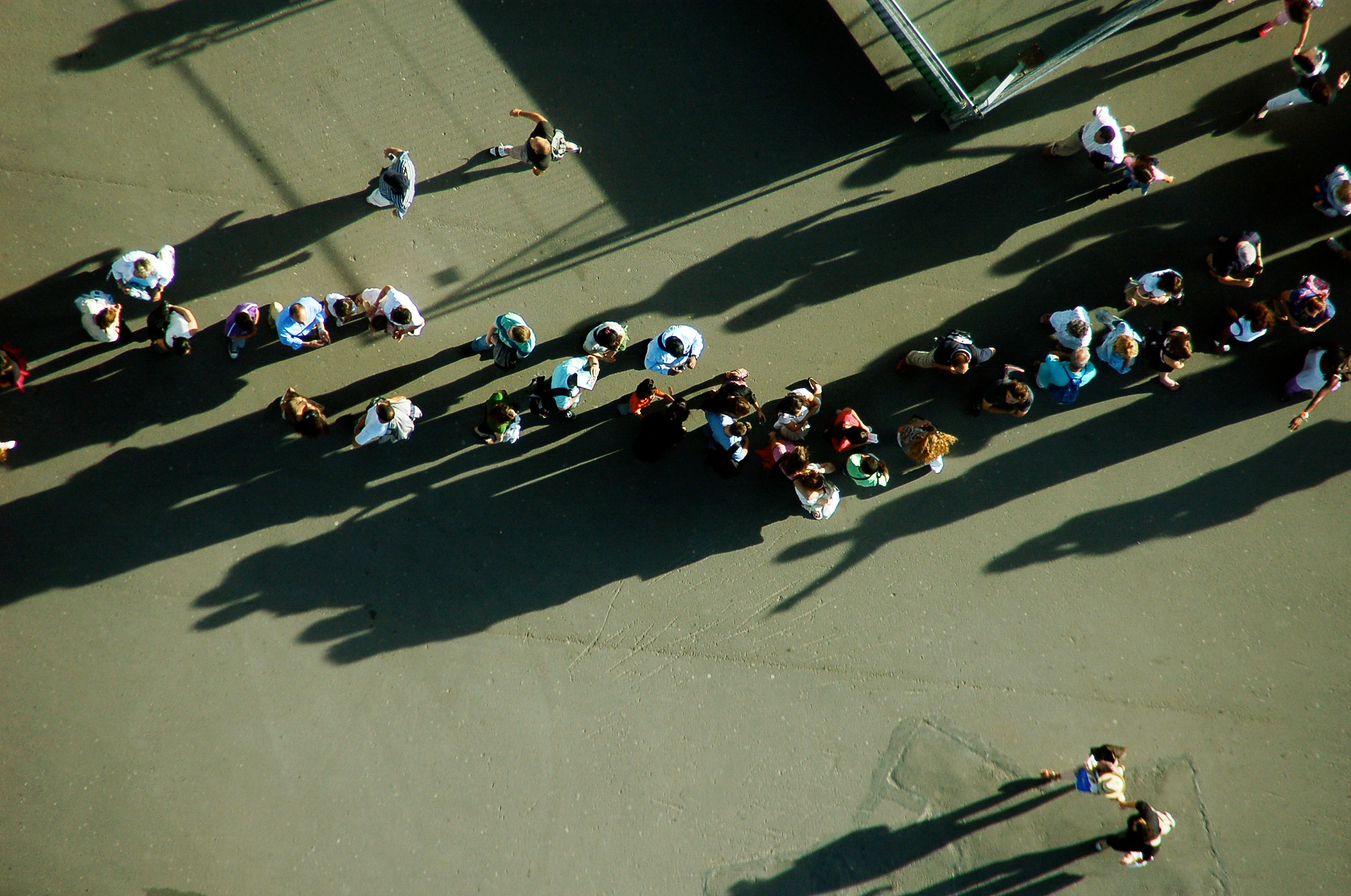
There’s a growing stereotype that Torontonians are obsessed with lines. Not just the subway lines we cling to as they vanish from our maps – but the act of lining up. Come summer, when the humidity sticks and the air thickens between condo towers, we find ourselves queuing willingly for the newest seasonal garbage rolled out by boutique franchise chains. It’s as if, to keep us from fleeing the smoggy sprawl, these companies bait us with pastel-toned novelties just long enough to make us forget we’re sweating through our Dr. Martens loafers.
There’s something sinister about the way “neighbourhood” corporate cafés can churn out sterilised microtrends as if they were culinary events. It’s both disturbing and weirdly compelling. Case in point: banana. Banana matcha. Banana pudding. Banana boba. In real time, the fad has drifted from dainty bows and dusty pinks to docile berries and now butter yellow, as if everyone’s collective Pinterest board was curated for an Architectural Digest baby nursery. It feels almost infantilising that I’m still enamoured with the cutesy gimmicks of a colourful latte or a fuzzy collectable figure dangling from someone’s Uniqlo purse.
We line up – desperately – for deli sandwiches, pizza, burgers, ice cream, and lattes. Some might say it’s because these are achievable luxuries, the kind we can justify in place of the premade salad budgeted into a notes app grocery list. Or maybe it’s about connection, to the shrill, persuasive voice of Instagram reels insisting that the new strawberry Dubai tanghulu matcha in Kensington Market is “to die for.” Or maybe it’s just about being part of it. The same way we scroll past photos of acquaintances posing on balconies with skyline views and assume they’re part of the nightlife, or see them on a dark street in a grainy digital camera post outside a closed pharmacy ripping a dart. We’re just fascinated with being there, or at least the thought of a summer utopia.
If you wish to be elsewhere, there’s no shortage of influencers ready to tell you that, with just a short drive out of the city, “hidden gems” await around every corner. “Run, don’t walk to this oasis, just 45 minutes from downtown!” In reality, that’s the commute to a Best Buy parking lot in North York. These desperate grabs for traction seem designed with disappointment in mind. Every beach within a two-hour radius is either filthy, crowded, overpriced, or the domain of that one wealthy friend who grew up in the GTA playing AA hockey and summers at a well-maintained cottage with a pontoon. For everyone else, it’s a trap.
The baseline expectation a hardworking university student has for the summer is simply: have fun. But beyond “fun,” there are no instructions. No roadmap for maintaining a sense of purpose once the academic machine stops measuring your value by deliverables and deadlines. Summer depression becomes the natural consequence of perfectionism. Every high-strung student knows the pattern: you permit yourself to rest (only so you can continue maintaining the unsustainable pace at which you work) and then feel uprooted now that your structure has disappeared. Who am I if I’m not emailing my TA for an extension just to spend four more hours rewording one out-of-place idea? When did my presence shift from valuable and insightful to nonexistent? The roles I fill within the confines of the academic year simply vanish.
There’s a balance, though. Take a summer course, an internship, a part-time job, or a volunteer gig to pass the time, maybe even make a little money. Fight for that position, network your way into visibility, and leverage your time by building a future career like the start of a Jenga game. Or, like me, pin the weight of your future on the idea of grad school.
You know things are getting serious when your calendar app stops being about appointments and shifts into something else entirely: a feed of positive affirmations meant to remind you that you’re still a person. “Wake up and see goodness in the world” is followed by “remember to eat and nourish your body,” then “get to your afternoon shift, you are a valuable part of a team.” Which is, of course, what it would look like if I had a job. Instead, I’ve spent so much time at Service Ontario that it practically feels like a job. Or maybe a deli. There’s a lot of waiting, anticipation, and frustration, but at least you get your very own number. You’re accounted for, swallowed into the greater sea of angry people.
Like dancing at a club when the photographer’s making the rounds, being at Service Ontario requires a kind of performance. You wear a face, forcing camaraderie with the people around you. Pretending you hate it just as much as everyone else, even if you’re secretly grateful for the spare time to skim that book chapter your professor recommended months ago, still bookmarked on Internet Archive. That is, until the prose starts reading too uncomfortably academic, and you find yourself back on Google searching, “movies that won’t make me cry.”
There is hope, though, for us who are depressed and OSAP-reliant. Vendor markets, open-air concerts, and sitting on grass at very specific times of day are a student’s liberty. All you need is a tattered blanket, a good outfit, and a preroll to feel like Christie Pits herself.
Go to Trinity Bellwoods. Loiter. Feed an off-leash Labrador blueberries while its owner is distracted by the kid who just kicked a soccer ball too close to their partner. Watch unattended children protectively from the corner of your eye until their parents materialise out of thin air. Forget to pack a granola bar in your tote and rock back and forth trying to accept that you’ll have to leave your spot to buy an overpriced bag of all-dressed chips. Get stared at by the old guy in the “Make Dundas Portuguese Again” shirt and wonder if he’s checking you out, or if he’s realised he’s your distant cousin. (He is. Shoutout João Marcelo.)
There is a strange charm, something almost tender, in this brief bout of depersonalisation. It reveals the polarities of your own humanness: that even at your lowest functioning, simply trying to cope with the sweltering heat and suffocating expectations, you can still recognise summer as a temporary spell. You still have a future to return to once the months pass. You begin to understand who you want to be come fall. And you accept that your future self will look back on this version of you and consider you an idiot for not savouring it more.
Then, of course, the cycle repeats.